
Spiritual Beliefs About Death and Funeral Rites Across Religions
When you face the passing of a loved one, the varied rituals of faith can feel both mysterious and deeply comforting. I have seen how understanding these practices brings peace to many grieving families.
This guide offers a respectful look at how different spiritual traditions view death and honor the deceased. It will cover Christian burial services, Islamic janazah prayers, Hindu cremation rites, Buddhist funeral ceremonies, and Jewish mourning observances.
Key Takeaways: Finding Common Ground in Ritual
Across every faith and culture, funeral rituals serve a few fundamental human needs. They create a space to honor a unique life that has ended. They give us a way to express our sorrow and love together, aloud.
These ceremonies, in all their beautiful variety, aim to provide two things: dignity for the person who has died and a structured path toward closure for those left behind. The specific prayers or actions may differ, but the intention to care is a universal language.
When we learn about traditions different from our own, we build bridges of respect. Understanding why certain actions are taken allows us to participate in or observe a service with reverence, even if the beliefs are not our own.
Common Threads: The Purpose of Religious Funeral Rites
From a spiritual perspective, funeral rites are often the first act of care for the soul’s journey. In many faiths, specific prayers and cleansing rituals are performed to help the spirit transition peacefully, whether to an afterlife, a state of judgment, or a new rebirth. The physical handling of the body is done with this sacred purpose in mind, as part of religious funeral services.
For the living community, ritual acts as a guide when the mind is numb with grief. It tells us what to do next when we feel lost. Saying prescribed words, singing together, or sharing a meal provides a comforting rhythm in a time of chaos. The structure of a funeral service holds space for our pain, allowing us to feel supported rather than alone in it.
Many people quietly wonder if their loved one can see the funeral gathering. Theological answers vary widely. Some traditions hold that the spirit remains present for a time, aware of the honors paid. Others teach that the soul has already moved on to its next destination and is at peace. The common thread is the human desire for connection, and the ritual fulfills that need for us, the living, regardless.
Christian Perspectives on Death and Funeral Customs
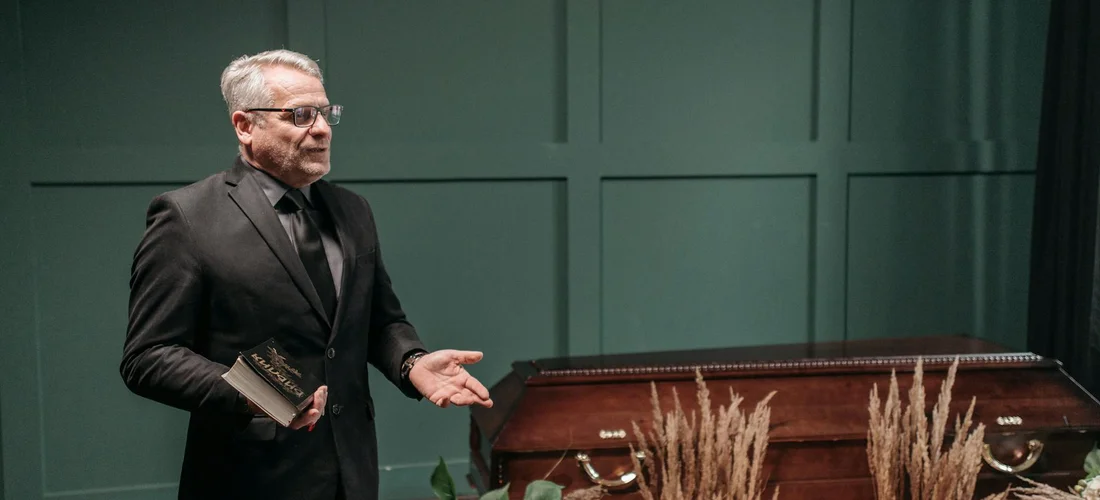
For Christians, death is a sacred transition. The core belief is in resurrection, where the soul departs to be with God, awaiting the promised reunion of body and spirit. This offers a profound comfort that frames the entire funeral process.
Heaven is understood as a place of eternal peace and presence with God. The funeral service, therefore, is both a solemn goodbye and a hopeful celebration of that promise.
The Structure of a Christian Funeral
Most Christian funerals follow a familiar three-part structure, though customs vary between Protestant and Catholic traditions.
A viewing or visitation often comes first. This is a quiet time for friends and family to gather, offer condolences, and see their loved one for a final time. It provides a tangible moment to begin processing the loss.
The funeral service itself is the central act. In Catholic tradition, this is typically a Requiem Mass, incorporating Holy Communion. Protestant services may be held in a church or funeral home. Both are deeply shaped by scripture, prayer, and hymns.
The committal service follows at the graveside or crematorium. This final act of committing the body to the earth or to fire is a powerful, symbolic moment of closure.
Scripture, Music, and Remembrance
Readings from the Bible are the backbone of the service. Psalms like the 23rd, and passages from the Gospels about eternal life, are chosen to provide comfort and reaffirm faith. Music, from traditional hymns to contemporary worship songs, lifts the collective spirit.
Eulogies or words of remembrance are common. They paint a picture of the person’s life, their character, and their faith. These stories transform the service from a generic ritual into a personal tribute.
A common question from the grieving is whether their loved one can see the funeral. The Bible does not provide a clear, definitive answer on this. Christian belief generally holds that the departed soul is in a state of peaceful rest with God, separate from the affairs of the living world.
Caring for the Body
Burial in a consecrated cemetery has been the traditional Christian practice, symbolizing the “sowing” of the body for its future resurrection. Today, cremation is widely accepted by most denominations.
If cremation is chosen, the ashes are often later buried in a family plot or placed in a columbarium niche. The focus remains on treating the physical remains with dignity and respect.
Islamic (Muslim) Last Rites and Beliefs
In Islam, death is a return to the Creator. Belief centers on the afterlife, where every soul will face a Day of Judgment based on their earthly deeds. This life is a temporary test, and death is a door to the eternal next world.
The period between death and the Day of Judgment is called Barzakh. It is a state where the soul rests in the grave, aware and awaiting final reckoning. This belief underscores the urgency and reverence given to funeral rites.
A Ritual of Speed and Simplicity
Islamic funeral rites are characterized by simplicity, dignity, and speed. Burial is strongly preferred to take place before sunset on the day of death, or at the latest, within 24 hours. This reflects a deep respect for the sanctity of the human body after death. In the muslim funeral traditions timeline, the sequence from washing and shrouding to the funeral prayer and burial is commonly observed.
The process begins with Ghusl, a ritual washing of the body. It is performed by same-gender family members or community experts with great care and privacy. The body is then wrapped in simple, white cotton cloths called the Kafan. This plain shroud signifies that all are equal before God in death, regardless of worldly status or wealth.
The Janazah Prayer and Community Duty
The body is then taken to a mosque or open space for the Janazah prayer. This is a short, communal prayer said for the forgiveness of the deceased. It is a collective obligation, and a large turnout is considered a great honor and support for the family.
Burial follows immediately. The body is placed directly into the earth, lying on its right side facing Mecca. Using a casket is generally avoided unless required by local law, emphasizing a direct return to the earth. Every step, from carrying the body to filling the grave, is ideally performed by members of the community.
Expressions of Grief
Grief is a natural and accepted emotion in Islam. Tears are seen as a mercy for the heart. However, loud, dramatic wailing or excessive lamentation is discouraged. The focus is on patient acceptance, prayer, and trusting in God’s wisdom.
Quiet mourning and remembrance are sustained. The community plays a vital role by visiting the family, bringing food, and offering prayers for the deceased in the difficult days and weeks that follow.
Jewish Traditions: From Aninut to Shiva
Jewish thought offers varied perspectives on the afterlife, but the immediate focus is on the sacred duty of the living. The core principle is Kavod HaMet, honoring the deceased with profound respect. This duty guides every action from the moment of death.
Burial usually occurs rapidly, often within 24 to 48 hours. This swiftness is seen as a final act of respect for the person who has died. Before the funeral, a sacred society, or Chevra Kadisha, performs Tahara, a ritual purification.
The body is washed with care and dressed in simple white shrouds called Tachrichim. The casket is traditionally made of plain wood, without metal. This simplicity reflects a belief in equality before God and a return to the earth.
The funeral service itself is solemn and direct, featuring Psalms, a eulogy, and the El Malei Rachamim memorial prayer. A central ritual is Kriah, the tearing of a garment by immediate mourners. This visible, physical act symbolizes torn grief.
Structured mourning periods provide a container for sorrow. Shiva is the first seven days, where mourners remain at home, supported by their community. Shloshim marks the first thirty days, a time of gradual return. These rituals create a clear path through the early stages of grief, ensuring no one is alone.
Traditional Jewish law prohibits cremation, favoring earth burial. There is a strong preference for materials that decompose naturally, affirming the cycle of life and dust. These beliefs shape current discussions of Jewish views on cremation customs. They influence how communities approach memorial practices within traditional guidelines.
Hindu Funeral Rites and the Journey of the Soul
Hindu beliefs center on samsara, the cycle of rebirth, governed by karma-the law of moral cause and effect. The ultimate spiritual goal is moksha, liberation from this cycle and union with the divine. Funeral rites are designed to help the soul, or atman, on this journey.
At the time of death, the person is ideally placed on the floor, closer to the earth. A lamp is lit near the head, and mantras are chanted, often into the ear. The eldest son or a close male relative typically takes the lead in the rituals, acting as a guide for the soul.
Open-pyre cremation, known as Antyesti, is the preferred practice. The body is seen as an offering to Agni, the fire god, who releases the soul from its physical form. This usually occurs within 24 hours of death. The sacred fire purifies and facilitates the soul’s transition to its next state.
After cremation, the bones and ashes are collected. They are often later immersed in a sacred river, like the Ganges. A period of ritual impurity for the family follows, lasting for several days.
Subsequent rites, called Shraddha, are performed to nourish the ancestor’s soul and help it move toward a peaceful rebirth. Mourning customs are observed, but the focus remains on the soul’s progress. The entire process is a sacred duty, transforming grief into a supportive act for the departed.
Buddhist Funeral Practices and Peaceful Transitions
Buddhism views death as a natural transition, not an end. Central to this are the concepts of impermanence, rebirth, and the Bardo. Impermanence means everything changes, like leaves falling from a tree. Rebirth is the belief that consciousness continues in a new form after death. The Bardo is a transitional state where the consciousness navigates between lives, seeking a peaceful rebirth.
The mindset at the moment of death is considered profoundly important for this journey.
When death is near, loved ones focus on creating a serene environment. They may chant scriptures or mantras, such as the name of Amitabha Buddha. The sounds are gentle and rhythmic, meant to calm the dying person’s mind. I have seen how this practice helps family members feel connected and purposeful during a difficult time. The goal is to aid the consciousness in letting go without fear or attachment.
Funeral services themselves are typically simple and reflective. They often involve monks who lead prayers and rituals. The primary focus is on transferring merit to the deceased, through good deeds and dedicated prayers, to support their positive rebirth. Offerings of light, incense, and flowers are common, filling the space with soft scents and a quiet, respectful atmosphere. The service is more about the community’s supportive intention than elaborate display, distinguishing it from many other funeral services.
Both burial and cremation are generally accepted in Buddhist practice. The choice often depends on local custom or family preference. What matters most is not the method of body disposition, but the state of mind cultivated in the dying person and those left behind. This perspective can bring comfort, shifting focus from loss to a compassionate wish for the deceased’s peaceful transition.
Alternative Options: Non-Religious and Personal Ceremonies
For many, a meaningful farewell does not involve religious doctrine. Humanist, agnostic, or atheist approaches center on celebrating the unique life that was lived. The ceremony becomes a tribute to the person’s character, relationships, and impact on the world. There is no prescribed script for an afterlife, which allows for full focus on the story of the individual.
These gatherings draw their power from personal authenticity rather than traditional liturgy.
You can include elements that genuinely reflect the person’s spirit. Music might be their favorite song. Readings could come from poetry, philosophy, or letters they wrote. Friends and family often share personal tributes and memories. I have helped families design ceremonies where laughter and tears mingled freely, creating a space that felt deeply true to the person being honored.
Final disposition choices often align with personal or environmental values. Green burial places the body in a biodegradable shroud to return naturally to the earth. Natural organic reduction, sometimes called human composting, transforms the body into soil. Memorial reefs incorporate cremated remains into artificial reef structures, supporting marine life. Each option offers a tangible connection to the cycles of nature, which can be a great source of solace.
Creating a personal ceremony is a valid and profound act of love. It affirms that a farewell can be deeply meaningful without following a traditional religious structure. Your focus on the individual’s story and values provides a genuine framework for both grief and celebration.
Note on Etiquette: Attending Services with Respect
Walking into a service for a faith different from your own can feel uncertain. The most respectful action you can take is to ask. A quiet question to a family member or the funeral director before the service begins shows care and a desire to honor their customs and traditions.
When you are unsure about what to do or what is expected, simply asking is a profound act of respect. This small step can ease your mind and assures the grieving family that you are there to support them fully.
Appropriate Attire
Choose clothing that is modest and conservative. For most services, dark, subdued colors like black, navy, or grey are a safe and respectful choice.
Unless the family specifies otherwise, think of your attire as a quiet, visual expression of sympathy, not a statement of personal style. I often advise people that if you are questioning whether an item is too casual or bright, it is better to choose something else.
Behavior During the Service
Arrive a few minutes early to settle in. The moment you enter, silence your phone completely; a vibration can be just as disruptive in a quiet space of prayer. Observe others and follow their lead for actions like standing, sitting, or kneeling.
Your silent, attentive presence is a powerful comfort, often more meaningful than any perfect ritual. If you are not comfortable participating in a specific prayer or song, it is perfectly acceptable to sit or stand quietly in reflection.
Offering Condolences
When you speak to the family, keep your words simple and sincere. A gentle “I am so sorry for your loss,” or “My heart is with you,” is always appropriate. Avoid offering explanations for the death or comparisons to your own grief.
A brief, heartfelt expression of sympathy and a warm handshake or hug if welcomed, is the greatest gift you can offer in that moment. They may not remember your exact words, but they will remember your compassionate presence.
Common Customs and Gatherings
Many traditions involve shared meals or gatherings after the service. Bringing food to the family home is a tangible way to offer care. If the family suggests a charity for memorial donations, contributing is a thoughtful tribute that honors the deceased’s values.
Participating in a post-service reception, even briefly, is a kind affirmation of community and continued support. It is not about the food or conversation, but about showing the family they are not alone in the days ahead. If you are invited, try to attend.
Finding Clarity and Comfort: Your Questions Answered

1. Why do funeral rituals vary so significantly between faiths?
Rituals differ because they reflect core spiritual beliefs about the soul’s journey after death. Whether preparing for judgment, rebirth, or eternal peace, each rite is designed to honor those beliefs and support both the deceased and the living.
2. How can we plan a service when families have different religious backgrounds?
Open communication and a focus on shared values-like love and respect-are the foundation. Many families successfully blend elements from each tradition or create a service with distinct, honorific segments for each faith.
3. Is it appropriate to participate in rituals of a different faith during a service?
Yes, if done with respectful intent. Observe or follow the lead of congregants; quiet participation in shared acts like standing or singing is often a meaningful gesture of solidarity and support for the grieving family.
Parting Reflections on Spiritual Beliefs and Funeral Rites
When planning a funeral, the most important guidance is to listen closely to the spiritual beliefs held by the deceased and their family. Honoring these traditions with care provides a foundation for a service that brings genuine comfort and respect, whether it’s Muslim funeral etiquette or another faith.
Providing dignified funeral care includes considering eco-friendly options that align with many spiritual values. Addressing funeral needs with compassion and pursuing answers to funeral questions through gentle learning ensures every decision supports a meaningful farewell.
Further Reading & Sources
- Important Death Rituals in Different Religions
- Death rituals and funeral rites of different religions
- 5 Unique Funeral Traditions from Different Religions
Emiliana Dieter
Emiliana is an author at The Valedictory. She is an experienced funeral care advisor and arranged and organized many funerals as part of her end of life consulting services. She has over 8+ years in the funeral industry managing her family funeral business and helping families cope with the loss of their loved ones. Her articles answer any and all questions you might have regarding funeral arrangements, costs, preparations, etc so you can make this a seamless experience.