
What Does It Mean to Dream About a Funeral? Interpreting Common Symbols and Scenarios
Waking from a dream about a funeral often brings a mix of confusion and quiet emotion. I want to help you approach these dreams with a sense of calm understanding.
This article will walk you through the gentle process of interpretation, focusing on common themes in funeral dreams, the meaning behind symbols like caskets or flowers, and what different scenarios-from being a mourner to being the one remembered-might reflect in your waking life.
Key Takeaways: Finding Peace in Your Dreams
Waking from a dream about a funeral can leave you feeling shaken. Your heart might still be racing. I want you to know, first and foremost, that these dreams are almost never a prediction of a physical death.
At their core, funeral dreams are about transition. They often symbolize an ending, a transformation, or the quiet, internal work of processing grief. Think of your mind using powerful imagery to make sense of change.
Remember a few reassuring truths: your dreams are deeply personal, they are not omens, and feeling unsettled by them is a completely normal reaction. The symbols are unique to your life and your heart.
Try to gently shift your view. See this dream not as a frightening omen, but as a message from your inner self. It is asking for your attention, not your fear.
What Does a Funeral Dream Generally Mean?
That jarring feeling upon waking is real. It is natural to worry when such vivid, solemn imagery visits your sleep. I have spoken with many people troubled by these dreams, and the first step is always a deep breath.
Psychologically, a funeral often represents a necessary ending. It can mean saying goodbye to an old habit, a job, a relationship, or a version of yourself that no longer fits. Dreaming of a funeral can be your mind’s way of formally closing a chapter—much like the real funeral of a loved one—making space for something new to begin.
These dreams also surface when we are processing grief, even old grief that whispers from the past. They can reflect anxiety about a potential loss or a significant change happening in your waking life.
So, what does a funeral mean in a dream? It is helpful to compare it to other dreams of transition. Dreaming of a graduation, a wedding, or moving to a new house all share this theme of change. A funeral dream is simply the most stark and final-seeming version of that story. It is like your mind choosing the most powerful metaphor it knows to get your attention about an ending. It encapsulates all the grave seriousness of a real funeral.
When the Dream Is About You or Someone You Know
Who is in the casket shapes the dream’s message. This detail holds a key to what your inner world is working through. If dream images touch on body appearance or viewing a coffin, they’re signaling how you handle endings and change.
Dreaming of your own funeral can be particularly startling. It frequently points to self-reflection. You might be thinking about your legacy, how others perceive you, or what part of your life or identity feels like it is fading away. Seeing your own funeral can symbolize the “death” of an old role, like transitioning from student to graduate or from caregiver to someone with more freedom.
Dreaming of a loved one’s funeral requires the utmost care in interpretation. If the person is alive, it rarely means you wish them harm. More often, it touches on a fear of losing them, unexpressed feelings in the relationship, or anxiety about a change in your connection. If you are grieving someone who has died, this dream may be a part of your continued journey to process that loss.
A stranger’s funeral in a dream can feel confusing. This stranger may represent an unknown or neglected part of yourself. It could also symbolize an abstract sense of loss, like grieving your lost time, a missed opportunity, or your own innocence.
Common Funeral Settings and Events in Dreams
The specific scenes within the dream offer more clues. The setting and events are like chapters in the story your mind is telling.
A funeral procession, with its slow, steady movement, often mirrors a process you are going through in waking life. It suggests a journey of acceptance that cannot be rushed. Being in a funeral home might connect to feelings about ritual, formality, or the structured aspects of dealing with an ending.
Dreaming of the service or hearing a eulogy often relates to words and perception. A eulogy in a dream can highlight concerns about how you are seen by others or point to words you need to say, or wish you had said, to someone important.
If you dream of missing the funeral entirely, it may speak to fears of being left out, not getting closure, or failing to properly honor an ending.
Dreams of the reception or wake focus on community and social aftermath. They can reflect your feelings about support systems, family dynamics, or finding closure through connection with others after a significant end.
Interpreting Specific Funeral Symbols in Your Dream
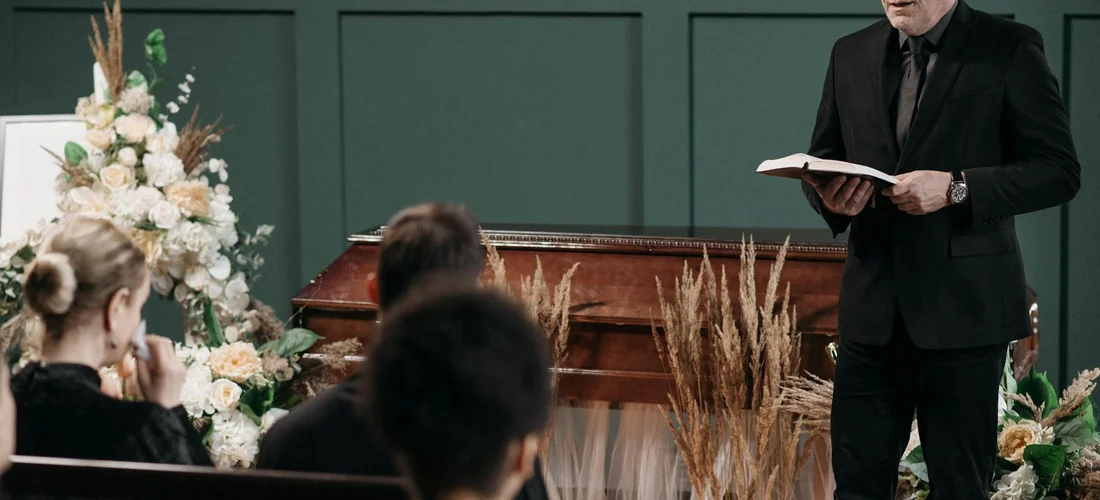
The objects you see in a dream are rarely just objects. They carry weight. They are metaphors, shaped by memory and feeling. A polished wooden box is never just that.
Think of these symbols as the vocabulary of your subconscious. To understand what dreaming of a funeral means, we must look closely at this language.
Caskets: Closed, Open, and Empty
A casket in a dream is a powerful container for your thoughts. Its state speaks volumes. I have stood beside countless caskets, each telling a different story about the family’s journey.
A closed casket can feel solemn and private. The polished lid hides what is inside. In a dream, this often points to something you are not ready to see or a truth being kept from you. It may symbolize an unresolved situation or a part of your own heart you have chosen to keep private.
An open casket presents a clear, if difficult, reality. The person lies in repose, undeniable. Dreaming of this can signify a moment of acceptance. You are being asked to confront a truth, to finally look at a situation or a feeling you have avoided. It is about facing reality, however painful.
An empty casket is one of the most unsettling images. The expected centerpiece is gone. This often reflects a fear of profound absence or a loss that has not been properly finalized. It can point to anxiety about something ending before you are ready, leaving you with a hollow, undefined grief.
If you dream of carrying a casket, feel the physical strain in your shoulders. This is the weight of duty, honor, or a heavy burden you feel responsible for. It is a direct symbol of the load you are bearing, whether for yourself or others.
Other Powerful Symbols: Hearse, Flowers, and Music
Other elements fill the dreamscape, each adding a layer of meaning to what dreaming of a funeral represents.
A hearse is a vehicle for transition. It moves slowly, purposefully, from one place to the next. Dreaming of a hearse rarely means a literal death. It more likely symbolizes a journey you are on, a transition from one phase of your life to another. It is about moving on, even when the path ahead seems solemn.
Flowers bring color and scent to a space of loss. They are tributes, expressions of love that words cannot capture. In a dream, they can symbolize beauty amidst sorrow, a gesture of condolence you wish to give or receive, or a reminder of life’s fragile, fleeting nature. Their condition matters—wilted flowers differ from vibrant, fresh blooms. Understanding the meaning and traditions of funeral flowers can deepen their significance.
Music sets the entire emotional tone. A somber hymn might speak to deep sorrow, while a joyful song could hint at celebration. The music in your dream is the soundtrack to your inner processing. Is it mournful, peaceful, or strangely uplifting? This tells you about the emotional quality of the ending or change you are navigating.
Emotions in the Dream: Crying, Laughter, and Confusion
While symbols provide context, your own emotional experience is the truest guide. How you feel in the dream is the most important clue of all.
Crying at a funeral in a dream can be a profound release. It may represent sorrow you have been holding back, empathy for someone else’s pain, or grieving for a part of your own life that has ended. These tears are not a sign of weakness. They are often the mind’s way of processing deep emotion that waking life suppresses.
Laughing or feeling happy can be startling. It does not mean you are cold. It can symbolize a sense of relief after a long struggle, a joyful celebration of a life well-lived, or an ironic acceptance of life’s absurd twists. I have seen genuine laughter at memorials, a beautiful testament to love that outlasts grief.
Not knowing who the funeral is for creates a deep sense of confusion. This common experience usually points to a generalized anxiety about loss or change. You sense an ending, but its nature is undefined. It may reflect worry about losing a part of your identity, a relationship, or a life situation. The uncertainty itself is the source of the dream.
How to Gently Work With a Funeral Dream
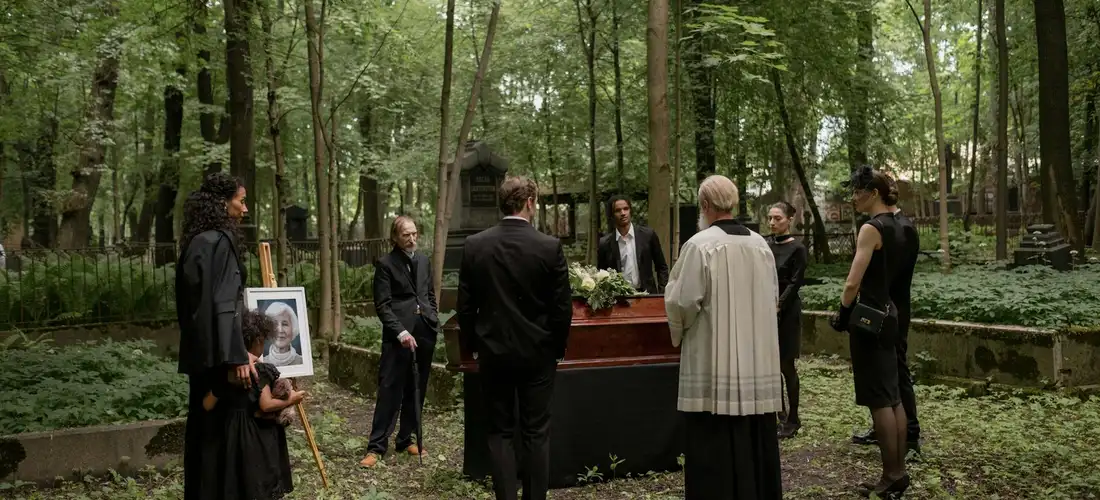
A dream about a funeral can feel like a cold splash of water upon waking. Your heart might race. It is okay to feel shaken. The first step is always to breathe and offer yourself the same kindness you would extend to a friend.
Treat the dream not as a prophecy, but as a quiet message from your own mind. Approach it with curiosity instead of fear, and you may find it holds meaning for your waking life. Here are a few simple ways to begin that gentle work.
- Keep a notebook by your bed. Write down everything you remember the moment you wake. Details fade quickly like morning fog.
- Sketch the scene if words feel hard. Draw the faces, the flowers, the casket. Let your hand move without judgement.
- Speak the dream aloud to yourself. Hearing the story can soften its sharp edges.
Once the dream is captured, you can begin to reflect. Ask yourself gentle, open questions. Do not search for one right answer. Listen for the first feeling that surfaces.
- What in my life right now feels like it is ending? A job, a relationship, a chapter of my life?
- What loss, big or small, am I currently mourning?
- If the casket was closed, what part of myself am I refusing to look at?
- If I was a guest, who or what needs my attention and presence?
Resist the urge to interpret the dream literally. Dreaming of a funeral does not mean someone will die. These visions are almost always symbolic, representing an ending, a change, or a deep feeling of grief you are carrying. Have a compassionate dialogue with yourself. There is no need to rush.
A Personal Perspective: When My Own Dreams Visited a Funeral
Years ago, after my father died, I had a recurring dream. I was standing at his graveside, but the earth was bare. There was no casket, no marker. Just me and an open hole. I would wake with a hollow ache in my chest.
In my waking life, I had arranged a beautiful service. I had chosen the hymns and written the eulogy. I thought I had done everything “right.” The dream kept returning, a quiet pulse beneath my busy days.
It took time to understand. My mind was showing me what my heart had not yet faced: the raw, unfinished reality of his absence. The ceremony was over, but my grief was still an open space, waiting to be acknowledged. The dream was not a horror. It was my mind’s patient, gentle work, guiding me toward the integration I needed to heal.
Support and Reflection: If the Dream Lingers
Some dreams cling to us. They linger in the background of our day like a familiar, sad song. If a funeral dream feels deeply unsettling, or if it returns again and again, please be extra tender with yourself. This is often a sign that your heart is holding a weight that asks to be shared.
You do not have to carry these feelings alone, and speaking them aloud can change their shape. Consider reaching out for a compassionate listener who can help you hold this space.
- Talk to a trusted friend or family member. Simply saying, “I had a difficult dream,” can be a relief.
- Speak with a therapist or grief counselor. They are skilled guides for navigating the landscape of loss and dreams.
- Join a grief support group. You will often find that vivid, symbolic dreams are a common, shared experience in mourning.
There is no timeline for processing grief, and that includes the dreams it brings. Seeking support is not a sign of weakness. It is an act of strength and self-care. It is how we honor the complexity of our love and our loss, both waking and sleeping. Grief support for cremation loss can offer a compassionate space to navigate this journey. Reaching out for help is a meaningful step in honoring your memories and caring for yourself.
Gentle Guidance: Answering Your Questions on Funeral Dreams
What does it mean to dream about a graveyard or cemetery?
Dreaming of a graveyard often symbolizes a period of reflection on past endings or losses. It can gently remind you to acknowledge what has been laid to rest, fostering closure and peace in your current life.
What does it mean to dream about a burial?
A burial in a dream typically represents the active process of accepting an ending, such as letting go of a situation or part of yourself. This symbol encourages you to honor this completion as a natural step toward healing and renewal.
What does it mean to dream about a cremation?
Dreaming of cremation usually signifies a transformative release, where old patterns or emotions are dissolved to make way for essential change. It may point to a purifying transition, inviting you to embrace growth with compassion.
Parting Reflections on Funeral Dreams
When a funeral appears in your dreams, see it as an invitation to gently examine your feelings about change, loss, or goodbye. Your own heart and context are the truest guides to what these symbols may mean for you.
If these dreams surface thoughts about mortality, approaching Funeral Care with dignity and mindfulness, including eco-friendly options, is a compassionate step. Staying open to learning about Funeral Needs and Funeral Questions can bring peace and preparedness for life’s transitions.
Emiliana Dieter
Emiliana is an author at The Valedictory. She is an experienced funeral care advisor and arranged and organized many funerals as part of her end of life consulting services. She has over 8+ years in the funeral industry managing her family funeral business and helping families cope with the loss of their loved ones. Her articles answer any and all questions you might have regarding funeral arrangements, costs, preparations, etc so you can make this a seamless experience.