
A Compassionate Guide to Applying for Death Benefits: Government, Veterans, and SSS Support
The paperwork after a loss can feel like a heavy, confusing burden. I understand how much you need clear guidance right now.
This article will walk you through each part of the process, focusing on government death benefits, veterans benefits, SSS burial benefits, and spousal claims.
Key Takeaways: Immediate Guidance for a Difficult Time
Planning a funeral while managing your grief is a heavy load to carry. I want you to know that practical support exists to ease some of the financial strain. This process is a series of clear steps, and you do not have to navigate it alone.
My aim here is to guide you, with kindness and clarity, through the two main sources of assistance: benefits from the Social Security System (SSS) and from Veterans Affairs (VA). Your first and most manageable task is simply to gather the necessary documents, which we will outline together.
Immediate Action Checklist: Your First Steps
In the first day or two, focus on these few critical actions. You can handle them one at a time.
- Request multiple original copies of the official death certificate from the funeral director or local civil registry. You will need these for every claim.
- Locate the deceased’s Social Security (SSS/GSIS) number and, if they served, their military discharge papers (DD Form 214 or similar).
- Notify your chosen funeral director. They can often help you start the notification process for certain benefits.
- Reach out to a trusted friend or family member. Ask them to be your second pair of eyes or simply to sit with you.
Essential Documents and Information to Locate
Gathering these papers will form the foundation for both your SSS and VA claims. Place them all in a single folder as you find them.
- At least two original copies of the Certified Death Certificate.
- Marriage Certificate (for spouse’s claims).
- Birth Certificates for any dependent, unmarried children.
- Valid government-issued IDs for yourself and the deceased (passport, driver’s license, etc.).
- The deceased’s SSS number and/or GSIS number.
- The Veteran’s DD Form 214 (Report of Separation) or equivalent service records.
- Bank account details (bank name, account number) for direct deposit of benefits.
Who Is Eligible for These Government and Veterans Death Benefits?
Financial assistance after a death generally comes from two separate streams. One is based on a lifetime of work contributions, and the other is based on military service.
The Social Security System (SSS) provides a burial grant and survivorship pension to the eligible family of a deceased member who made the required monthly contributions. The Department of Veterans Affairs (VA) provides burial allowances and ongoing benefits to the surviving family of an eligible veteran. To answer your direct questions: yes, a legal spouse or child is typically eligible for SSS burial benefits. And yes, a widow of a veteran often does qualify for VA death benefits.
Understanding SSS Eligibility for Survivors
SSS benefits are paid to what are called primary beneficiaries. The system is designed to support the immediate family who relied on the member.
The primary beneficiaries are the legal spouse, dependent children, and in some cases, dependent parents. To qualify, the deceased member must have paid at least 36 monthly contributions before the semester of death. The lump-sum burial grant is paid to whoever paid the funeral expenses, which could be a surviving spouse, a child, or even a sibling.
Understanding VA Eligibility for Surviving Spouses and Dependents
VA benefits honor military service. Eligibility hinges on the veteran’s discharge status and the nature of their passing.
A surviving spouse of a veteran may be eligible for a burial allowance and potentially a monthly pension, especially if the veteran’s death was connected to their service. Unmarried dependent children may also qualify. For a non-service-connected death, the veteran must generally have been receiving VA pension or compensation, or have been discharged under conditions other than dishonorable. So, to be clear, military spouses and spouses of veterans do get death benefits if the veteran’s service meets the VA’s criteria.
What Are the Specific Benefits Available for Funeral Expenses and Survivors?
The weight of funeral costs can feel heavy when you are grieving. I want you to know that help exists. Government programs offer specific financial benefits to ease this burden for families and surviving spouses.
For those who paid into the Social Security System, or SSS, there is a lump-sum burial benefit. For veterans who served our country, the Department of Veterans Affairs provides a range of support, from immediate funeral allowances to ongoing survivor pensions.
You might be asking, “What government death benefits are available for surviving spouses?” The answer includes both immediate aid and long-term security. A surviving spouse is often the primary beneficiary for a one-time SSS burial claim and a potential monthly pension. From the VA, a spouse may receive a burial allowance and ongoing Dependency and Indemnity Compensation.
These benefits are a form of recognition and support, designed to provide practical relief during a difficult time.
SSS Burial and Survivorship Benefits Explained
The SSS provides a one-time burial claim to help with immediate funeral expenses. This is a fixed amount, and it is paid to whoever paid for the funeral or to the legal spouse.
This lump sum is intended to offset a significant portion of basic funeral costs, offering tangible support when it is needed most.
For the primary beneficiaries, usually the dependent spouse or minor children, the SSS also offers a monthly survivorship pension. This ongoing financial support helps provide stability after a loss.
If you are wondering how to get the SSS death benefit, you start by gathering the required documents. You will need the death certificate and proof of your relationship to the deceased, like a marriage contract. The next step is to file the claim at any SSS branch.
VA Burial Allowances and Survivor Benefits Explained
The VA offers a burial allowance to help cover the costs of interment for an eligible veteran. This is a set amount that can be applied to funeral home services.
There is also a separate plot interment allowance if the veteran is not buried in a national cemetery. This helps pay for a private burial plot.
For surviving families, the VA provides ongoing benefits like Dependency and Indemnity Compensation for service-connected deaths or a pension for low-income survivors.
The VA can also provide a United States flag to drape the casket and a government headstone or marker for the grave. These items honor the veteran’s service with dignity.
Applying for these benefits requires discharge papers and the death certificate. I encourage you to reach out to your local VA office; they can guide you through the process with care. It’s especially important for those seeking military funeral honors for veterans.
How Do I Apply for SSS Burial and Survivorship Benefits?
Many families ask me, “How do I apply for SSS burial benefits?” during our meetings. I understand this task can feel heavy when your heart is sore. Let me walk you through the process, one clear step at a time.
The application unfolds in two main parts. First, you gather the necessary papers. Then, you submit your claim to the Social Security System.
Step 1: Gather Your SSS Claim Documents
Preparing your documents is the most important part of the process. Having everything in order saves you time and repeated visits. This answers the common question, “What documents are needed for SSS burial claims?”
You will need both forms and certificates. Refer back to your essential documents folder that we discussed earlier. Here is the complete list for a standard claim.
- The original and a photocopy of the member’s death certificate.
- Properly accomplished SSS Death Benefit Application (Form DDR-1).
- Valid primary IDs of the claimant and the deceased member.
- Original or certified true copy of the marriage certificate for a spouse’s claim.
- Birth certificates of any minor dependent children.
- The deceased member’s SSS number or a copy of their SS ID card.
- Proof of the claimant’s relationship to the deceased.
Gathering these papers is an act of care, a final practical gesture for your loved one. I often sit with families to check each item off the list, and that shared focus can bring a moment of calm.
Step 2: Submit Your SSS Claim
Once your documents are assembled, you can file your claim. This is the practical answer to “how do i claim death benefits.” You have options for where to submit.
The most direct way is to visit the nearest SSS branch. Bring all your original documents and photocopies. You can also check if the SSS online system accepts death benefit applications, as services expand.
When you file, the SSS officer will review your papers and give you an official claim receipt. This paper is your proof of submission. Keep it safe. Processing times vary, but the branch can often give you an estimate.
You may wait several weeks for the benefit to be released. I tell families to mark a gentle reminder on their calendar. Then, try to let the worry go for a while. The system is working.
How Do I Apply for Veterans Burial Benefits and Spousal Claims?
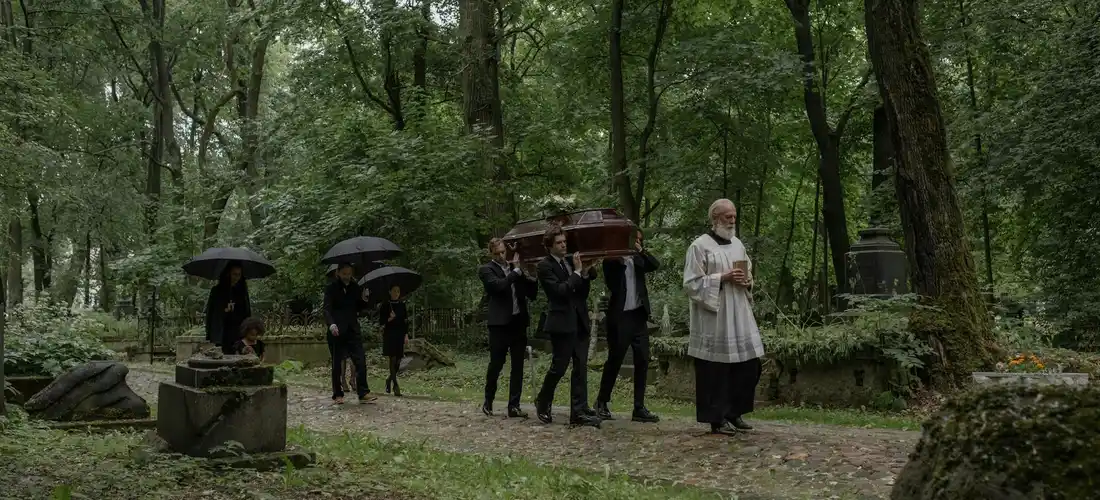
Many families find comfort in the honor and recognition provided by veterans benefits. The process, while detailed, is a final tribute to your loved one’s service. I will walk you through the clear steps to secure burial benefits and spousal claims.
Step 1: Gather Your VA Claim Documentation
Preparing your paperwork is the most important first step. Having every document ready will prevent delays when your mind may be elsewhere. Gather these items in a single folder.
You will need the following for both burial allowances and Dependency and Indemnity Compensation (DIC) or survivor pension claims:
- The veteran’s DD Form 214 (Report of Separation).
- The veteran’s death certificate.
- Your marriage certificate (for spousal claims).
- Funeral home itemized receipts (for burial benefits).
- Social Security numbers for you and the veteran.
- Bank account information for direct deposit.
The DD Form 214 is your most critical document; it is the official proof of military service required to process any claim. If you cannot find it, you can request a copy through the National Archives. Take a moment to locate it before anything else.
Step 2: Submit Your VA Claim
Once your documents are assembled, you have several paths to submit your claim. You are not alone in this process, and help is available.
For many, the clearest way to understand how to claim a death benefit is to work with a Veterans Service Officer (VSO). These accredited representatives, often from organizations like the VFW or American Legion, provide free, expert guidance. They can review your forms and submit them on your behalf.
You can also apply online through the VA.gov website, which guides you through the application. Alternatively, you can mail completed forms to your regional VA office. While these are valid options, the paperwork can feel overwhelming during grief.
I strongly recommend seeking a VSO. They navigate these systems daily and can be a steady, knowledgeable guide. Your local VA office or county veterans service agency can connect you with one.
Where Do I Submit These Applications and Find Help?
You may ask, “Where do I submit applications for these benefits?” It is a natural question when loss makes every step feel uncertain.
For SSS burial benefits, visit any SSS branch office. You can find the nearest one through their official website or by calling their national hotline. I have accompanied families to these offices, and the process, while formal, is handled with care.
For VA benefits, start with your local VA regional office. Their website provides a complete directory of locations and phone numbers. Submitting your forms here ensures they reach the right people without delay.
You do not have to manage this alone. Free, accredited help is available from VA-recognized service organizations. These groups offer trained volunteers who will assist you with every form, entirely without charge.
Their guidance is a quiet comfort. They know the system intimately and can often foresee hurdles. I have watched them bring gentle order to a difficult time for many veterans’ families.
What Are the Critical Deadlines and Time Limits for Claims?

Managing paperwork is often the last thing you want to do after a loss. Grief makes even simple tasks feel monumental. I understand that. Still, knowing these timeframes can prevent unnecessary stress later.
Each benefit program operates on its own schedule. Missing a window can mean forfeiting assistance you are rightfully due. Applying as soon as you are practically able is the single most important step, even if you can only gather one document at a time.
Specific Timeframes for Major Benefits
For veterans’ benefits, the clock starts from the date of burial or cremation. You typically have two years from that date to file a claim for the VA burial allowance. The process for a burial plot in a national cemetery has no time limit, but the application for a headstone or marker must be made after the burial has occurred.
Social Security is different. You should notify them of the death immediately. The one-time death benefit is paid automatically to the eligible spouse when the death is reported. There is no formal application, but a delay in reporting can complicate other benefits.
Are there time limits for applying for these death benefits?
Yes, most programs have them, and they vary. The two-year rule for the VA burial allowance is a common one. Other state or local benefits may have shorter windows, sometimes just months.
Do not let the fear of a deadline paralyze you. Start by making one phone call or collecting the death certificate. Think of it not as a bureaucratic task, but as a final act of care for your loved one and your family. You are securing the support that is owed.
A Practical Path Forward
Here is a gentle way to approach it.
- In the first week, focus on obtaining multiple certified copies of the death certificate from the funeral home.
- Within the first month, notify Social Security and begin the VA claim if applicable. You can start an application online and save your progress.
- Reach out to the funeral director who assisted you. We often help families compile the necessary verification documents.
If a deadline has passed, still apply. Sometimes exceptions can be made for compelling circumstances. The most common reason a claim is denied is that it was never filed at all.
Common Questions About Combining and Understanding Benefits
Navigating benefit systems while grieving is a heavy task. I understand this can feel overwhelming. The details matter, and getting them right can provide meaningful financial support during a difficult time. Knowing the death benefits payout timeline can help set expectations and prevent surprises as you navigate forms and deadlines.
Let’s address some of the most common practical questions that come up when families are dealing with both Social Security and veterans affairs.
What Is the Difference Between SSS and Veterans Burial Benefits?
These benefits come from two entirely separate government agencies. Think of them as two different sources of help, each with its own rules and purpose.
The table below shows the key differences at a glance.
| Aspect | Social Security (SSS) Burial Benefit | Veterans Burial Benefits |
|---|---|---|
| Source Agency | Social Security Administration (SSA) | U.S. Department of Veterans Affairs (VA) |
| Eligibility Basis | Based on the deceased’s work history and payment of Social Security taxes. | Based on the deceased’s military service record and discharge status. |
| Benefit Types | A one-time lump-sum death payment to a surviving spouse or child. | May include a burial allowance, a plot or interment allowance, a government headstone or marker, a burial flag, and potential burial in a VA national cemetery. |
The Social Security benefit is primarily a cash payment to help with immediate costs, while Veterans benefits often include both monetary allowances and specific services, like a gravesite or marker.
Can You Receive Both SSS and Veterans Benefits?
Yes, you generally can. They are separate programs designed for different reasons. Receiving the Social Security lump-sum death payment does not automatically disqualify you from VA burial allowances, and vice versa.
You should apply for both if the deceased was eligible, as they can work together to cover funeral expenses.
There is one important nuance to remember. If you are applying for a needs-based pension from the VA, like the Survivors Pension, the one-time payment from Social Security could be counted as income. This might temporarily affect the pension amount. It’s a specific situation, but worth asking the VA about if it applies to you.
My advice is to apply for every benefit for which you are eligible. Gather the documents for each application separately, and be patient with the different processes.
Finding Additional Support for Funeral and Immediate Expenses
Government and veterans benefits provide crucial assistance, but they often do not cover the full cost of final arrangements. I have seen many families face this quiet reality. The gap between the benefit check and the final bill can feel like one more weight during a heavy time.
Planning a service that feels honorable should not create financial distress. There are respectful and practical ways to bridge this gap without compromising dignity. You are not alone in navigating this.
Respectful Avenues for Additional Support
Look to community and existing networks first. These sources often understand your loss personally.
- Community and Faith Groups: Your place of worship, cultural associations, or local community clubs may have benevolent funds. They frequently offer discreet help to members.
- Employer or Union Benefits: Contact the human resources department of your loved one’s former employer. Some companies offer a death benefit, and union membership may include additional assistance.
- Fraternal Organizations: Groups like the Elks, Masons, or VFW often have burial aid programs for members and their spouses.
Working with Your Funeral Home
A reputable funeral director is your partner in this. Speak openly with them about your budget constraints.
They can explain all available options clearly. Many homes offer payment plans or can direct you to compassionate financing programs. Ask them directly about scaled-down service packages that still honor your loved one’s memory. A simple gathering can be just as meaningful as a elaborate one.
What support is available for funeral expenses?
Beyond government benefits, support often comes from the community built during a lifetime. Check with employers, unions, and membership organizations for survivor aid. Many funeral homes offer flexible payment plans and can design services for nearly any budget. If cost is a concern, explore pay funeral expenses options. These options can help you manage costs while still honoring your loved one. Do not hesitate to ask your funeral director for a clear, itemized list of costs; this allows you to make informed choices about what is most important to your family.
Frequently Asked Questions: Gentle Guidance on Death Benefits
Who is eligible to receive SSS burial benefits?
The SSS burial grant is typically available to the legal spouse, dependent children, or the individual who paid the funeral expenses. Eligibility requires the deceased member to have made at least 36 monthly contributions to the SSS during their lifetime.
What is the first step in applying for veterans death benefits?
Begin by securely locating the veteran’s DD Form 214, as it is the essential proof of service needed for any claim. This initial organization can provide a sense of control and clarity as you move forward. When you later explore veterans burial benefits DD214 forms, the DD214 is often required to verify eligibility, so having it well-organized will streamline those steps.
Can I apply for both SSS and veterans benefits simultaneously?
Yes, you can and should apply for both if eligible, as they are separate programs designed to work together. This approach helps ensure you receive all available support to ease the financial burden during this time.
Parting Reflections on Benefit Applications
The most important step is to start the process early with all required paperwork in hand, such as the death certificate and discharge papers. This careful preparation shows respect for the legacy left behind and helps navigate the administrative path with greater ease.
In making arrangements, choosing dignified care and sustainable options reflects a deep, personal tribute. I encourage you to keep exploring resources on Funeral Care, Funeral Needs, Funeral Questions, and related topics to find peace and purpose in every decision.
Emiliana Dieter
Emiliana is an author at The Valedictory. She is an experienced funeral care advisor and arranged and organized many funerals as part of her end of life consulting services. She has over 8+ years in the funeral industry managing her family funeral business and helping families cope with the loss of their loved ones. Her articles answer any and all questions you might have regarding funeral arrangements, costs, preparations, etc so you can make this a seamless experience.