
Funeral Procession Rules: Traffic Laws, Right of Way, and Etiquette
Seeing a line of cars with headlights on in midday often signals a funeral procession, a moment that demands our respect and quiet understanding. You may feel uncertainty about how to proceed, whether you are in the procession or sharing the road.
This article offers practical advice from my experience guiding countless families. We will cover the traffic laws that vary by state, explain right of way protocols for safety, and share the heartfelt etiquette that honors the bereaved.
Key Takeaways: Compassionate Guidance at a Glance
When you see a line of cars moving slowly with their headlights on, it is more than traffic. It is a community in motion, accompanying someone on their final journey. The law recognizes this sacred purpose.
In most places, funeral processions are granted the right of way. This ensures the journey to the cemetery is dignified and uninterrupted for the grieving family inside those cars. Observing funeral car procession etiquette keeps the procession orderly, dignified, and respectful. It also helps ensure safety for all drivers and pedestrians along the route.
Laws do vary from state to state, but the core principles of respect, safety, and compassion are universal guides for all of us on the road.
We share a responsibility in these moments. Your patience and care as a fellow driver are a quiet but powerful form of support. I have sat with families after a service, and the simple act of an uninterrupted drive provides a moment of peace in a hard day.
Following these guidelines is a direct way to honor the person who has died and to offer comfort to those mourning them, adhering to proper mourner’s etiquette.
When Does a Funeral Procession Have the Right of Way?
The general rule is straightforward. A funeral procession has the right of way to proceed through intersections and past traffic signals as a single, united group. Think of it as a solemn convoy that should not be broken apart by everyday traffic. In funeral planning, different procession types have names. Terms like cortege or motorcade identify the formations.
This right allows the procession to stay together, which is so important for the family. They should not have to worry about getting separated at a green light or a stop sign while carrying their grief.
A funeral procession has the right of way at intersections unless a traffic control device, a police officer, or an emergency vehicle with active lights and sirens directs otherwise.
This right is typically contingent on the procession being properly identified. You will usually see headlights on, hazard lights flashing, or small purple or orange flags on the vehicles. These signs are a request for your awareness and your grace.
Understanding Right of Way at Intersections
How this works in practice is guided by the lead vehicle, often a hearse or a funeral coach. When the lead vehicle enters an intersection legally-even if a traffic light turns red-the entire procession may follow. The lead vehicle dictates safe passage for every car behind it, creating a protective bubble of right of way.
As a driver, if you see the lead car proceed with caution, you should expect the rest to follow. Please wait. Let them all pass. I recall guiding processions where this silent understanding from other drivers felt like a collective act of respect.
In essence, a funeral procession has the right-of-way at intersections unless a very specific local law creates an exception. Understanding funeral planning legal rights helps families anticipate these situations and coordinate with authorities. Your safe and patient response turns a legal courtesy into a human one.
Exceptions and State Law Variations
While the right of way is common, it is not absolute everywhere. Local statutes can differ. A funeral procession has the right-of-way unless specific state or city laws limit it, which is why verifying your local rules is a wise step.
Common exceptions are grounded in greater urgency. You must always yield to an emergency vehicle responding to a call. You must also obey the direct signal of a police officer, who may need to manage an unusual traffic situation.
The law may not require you to yield in every single scenario, but our shared humanity does. When in doubt, err on the side of stillness and let them pass. It is a small gesture that holds great weight for the people in those cars.
What Traffic Laws Govern Funeral Processions?
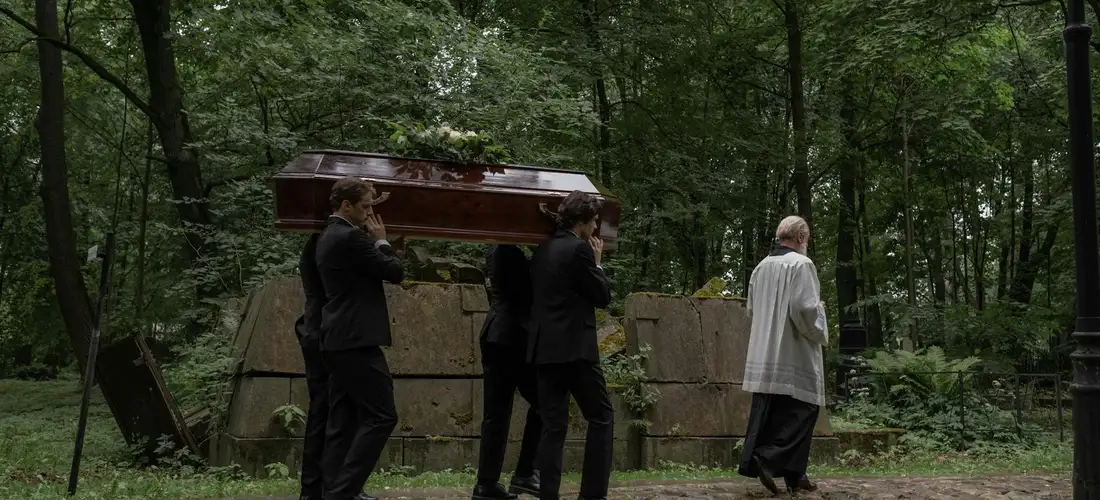
You may wonder if the line of cars following a hearse is above the law. The truth is more nuanced. Funeral processions are not exempt from all traffic rules, but they are granted specific courtesies by statute.
These allowances exist for one simple, human reason: to keep a grieving family together on their final journey. The law recognizes the deep need for continuity and respect during this vulnerable time.
Every state has its own codes, but common legal requirements for a procession include:
- All vehicles using headlights during the day.
- The lead vehicle and hearse displaying funeral pennants or flags.
- Vehicles may use hazard lights to identify themselves as part of the procession.
The lead funeral coach and any police escort vehicles are crucial for establishing the procession’s legal status. Other drivers are legally required to yield to them. Following cars, however, must still operate their vehicles with due care and attention. For funeral transportation planning, coordinating these elements in advance helps ensure a dignified, orderly procession. Careful routing and timing help minimize disruption for families and the public.
Legal Allowances and Driver Responsibilities
The law typically permits a funeral procession to proceed through a red light or stop sign once the lead vehicle has lawfully entered the intersection. This is a practical allowance, not a license for speed.
Processions may travel slightly below the posted speed limit to maintain unity, but reckless or dangerously slow driving is never permitted. The focus is on safe, dignified progression.
Lane usage is also adapted. Processions often stay in the right-hand lane, but local escorts may guide them to use multiple lanes on a highway to prevent dangerous separation. The key word from law enforcement is always “orderly.”
If a gap forms in the line, the legal right of way can dissolve. For your safety and the procession’s integrity, it is vital to follow the car ahead closely and avoid letting other traffic cut in. Think of it as holding a space in a solemn, moving ceremony.
Etiquette for Driving in a Funeral Procession
Driving in a funeral procession carries a responsibility. You are part of a final, shared journey. Your careful driving helps protect a moment of profound significance for a grieving family and shows proper etiquette for funeral vehicles.
Maintain a slow and steady pace, matching the lead vehicle. Drive closer to the car ahead of you than you normally would in traffic. This tight formation signals to others that you are one group, preventing interruptions.
Your headlights must be turned on, even during the day, to visually unite the procession. Many funeral homes provide magnetic flags for your car roof or window stickers. Use them. They are a clear, universal sign of your purpose on the road.
Avoid changing lanes or passing other cars in the procession. Stay in your lane and in your place in line. This discipline maintains order and prevents confusion for both fellow mourners and other drivers.
This drive is different from any other. You may be feeling grief, distraction, or solemn reflection. Put your phone away and minimize conversation to keep your focus entirely on the road and the vehicle you are following. Your primary role in this moment is to be a safe, present part of the procession.
Keeping the Procession Together
A unified procession moves with dignity. It is a collective act of respect. Small, conscious actions from every driver make this possible.
Use your turn signals only for actual turns, not for lane changes within the procession. If a gap starts to form in front of you, gently accelerate to close it. Do not let multiple car lengths open up, as this invites other drivers to cut in.
Traffic lights are the most common challenge. The lead funeral coach will often have a special light to communicate with traffic signals. Follow the vehicle in front of you closely, as the law often allows a funeral procession to proceed together through an intersection once the lead car has entered it legally.
If you do get separated at a red light, do not run it. Wait for the green light, then proceed safely. The procession will often pause just ahead to allow you to rejoin. If you cannot see them, proceed directly to the cemetery or reception location.
Stay calm if separation happens. It occurs frequently and is not a failure. The funeral director plans for this and will guide everyone to the final destination.
How to Respond as a Bystander or Other Driver
Seeing a funeral procession can feel sudden. You are sharing the road with people in a moment of profound grief.
Your primary role is simple: yield. Allow the entire line of vehicles to pass without interruption. This act of patience is a silent acknowledgment of their loss, helping them stay together during a difficult journey.
What if you find your car is blocking the procession’s path? Do not panic or make sudden moves.
- Wait patiently where you are if it is unsafe to move.
- Do not honk your horn or make impatient gestures.
- If you can safely do so, slowly pull your vehicle to the right side of the road and stop.
Pulling over is a traditional sign of respect. It creates physical and emotional space for the procession to proceed. I have seen this small gesture bring comfort to grieving families, a reminder that their community sees and honors their pain.
Actions That Show Respect on the Road
Respectful driving protects the procession’s unity. It maintains the solemn rhythm from the funeral home to the final resting place.
Follow these clear guidelines if you encounter one.
- Do not cut into the line of cars, even if there is a gap.
- Do not pass the procession on the road.
- If you are at an intersection, pause and let the entire line pass through, even if the light changes.
This etiquette extends beyond drivers to everyone on the road. Pedestrians and cyclists can also show respect by pausing briefly. Stand quietly at the curb. Stop your bicycle. These moments of stillness are a powerful, shared recognition of a life passing by.
Safely Navigating Around a Funeral Procession
When you spot a line of cars with headlights on, moving at a solemn pace, prepare to slow down. Anticipating this gradual movement helps you avoid sudden stops and keeps everyone safe. Imagine the weight in each vehicle; aggressive actions like honking or weaving through lanes only add stress to a difficult day.
If you need to change lanes, do it with deliberate care. Check your mirrors, signal early, and merge smoothly when there is a clear gap. Taking your time with this maneuver prevents startling other drivers and honors the procession’s dignity.
Sometimes, the kindest choice is to take an alternate route. A quiet detour around the procession allows it to remain unbroken. I have always found that this small act of consideration costs little but means much to those saying a final goodbye.
You might feel a twinge of impatience when delayed. View that moment of waiting as a simple gift of peace to the bereaved. It is a brief pause in your day, but for them, it is part of a sacred journey.
If You Are Running Late
If you are behind schedule, take a deep breath. Remember that a funeral procession is a brief, dignified event, rarely lasting more than a few minutes. During planning, note the expected duration of the procession and coordinate with the funeral director to keep it on schedule. A clear schedule helps families and mourners participate with calm and respect. Your frustration will fade, but the memory of a respectful community can comfort a family for years.
I often remind drivers to plan for potential delays near cemeteries, churches, or funeral homes during common service times, like late mornings or early afternoons. Leaving a few minutes earlier when passing these areas shows foresight and compassion. It is a practical way to navigate life’s inevitable pauses with grace.
Common Mistakes to Avoid
Grief can cloud judgment, making simple tasks feel overwhelming. I want to help you avoid common errors that I’ve witnessed over the years.
- Emotional strain often leads to practical mistakes. Never assume your procession has right of way without confirming local ordinances, and avoid leaving large gaps that other drivers might interpret as an invitation to cut in. These gaps can break the unity of the procession, causing confusion and delay.
- Proper identification is crucial for safety. Failing to mark all vehicles with funeral flags or lighted headlights can confuse other motorists and put everyone at risk. Clear signals help maintain the procession’s integrity and respect on the road.
- Stay focused behind the wheel. Using a phone or becoming distracted while driving in a funeral procession disrespects the occasion and endangers lives. This time demands your full attention, both for safety and for honoring the person you’re remembering.
Oversights in Planning and Behavior
- Communication prevents chaos. Not having a clear, pre-communicated route or failing to coordinate with your funeral director for police escorts can lead to missed turns and added stress. A little planning ensures a smooth and dignified journey.
- Respect the pace of mourning. Any behavior that rushes the procession or disregards its solemn speed shows a lack of respect for the grieving family and the deceased. This is not a race. It is a final act of companionship.
A Note on Etiquette: Social Protocol and Respect
Traffic laws outline the right of way, but our behavior inside the cars defines the ceremony’s spirit. Moving beyond rules, we enter a social protocol where a quiet, solemn demeanor in each vehicle upholds the day’s dignity. I have seen families draw comfort from this shared, respectful silence.
Appropriate attire, like dark or subdued clothing, is a visible sign of your consideration. Keep conversations hushed and focused on remembrance, not everyday distractions. This helps maintain a space for reflection and honor.
These gestures are far from mere formalities. Each small act of respect, from a patient pace to a lowered voice, provides tangible comfort to the grieving family. It quietly affirms that their loss is seen and shared.
Unspoken Rules for Participants and Observers
Certain customs are understood without being posted. If you are driving in the procession, turn off non-essential music and refrain from ever overtaking the hearse. Your place in line is part of the tribute, a final escort.
For bystanders on the street or in other cars, a simple acknowledgment holds weight. A moment of silence or a respectful nod as the procession passes is a profound, compassionate gesture. It costs nothing but speaks volumes of communal respect.
Practical Steps for Organizing or Joining a Procession
For the person coordinating, the logistics can feel overwhelming while grieving. Break it down into clear steps. A funeral director is your most valuable partner here, as they do this every day.
As an organizer, your primary checklist is straightforward.
- Plan the exact route with the funeral home. They know which roads are suitable and any typical obstacles.
- Obtain any necessary permits from local authorities. Your funeral home usually handles this.
- Brief all drivers together before leaving. State the destination clearly and explain the “follow the leader” rule.
If you are joining the procession as a mourner, a little preparation makes a big difference. Your role is to be present, not to navigate.
- Arrive at the starting point with plenty of time. A rushed arrival adds stress on a difficult day.
- Ensure your vehicle has sufficient fuel for the entire round trip. Stopping breaks the solemn chain.
- Follow every instruction from the funeral director or escort. They are guiding everyone safely.
If your car becomes separated from the group, do not panic or rush. Do not attempt to run red lights or speed to catch up; safety and the law always come first. Proceed directly and calmly to the cemetery or reception location. Every funeral home provides a map or address for this exact reason.
Ensuring a Smooth and Dignified Journey
The lead vehicle, often called the escort, is the anchor for the entire procession. Its driver sets a deliberate, respectful pace and communicates with traffic control. Think of it as a beacon for the line of cars to follow.
That steady pace allows the procession to stay together as one unit. It prevents gaps that other drivers might try to cut into, preserving the integrity of the farewell.
I often recommend families assign a specific contact person, other than the funeral director. Provide one phone number to all drivers for non-emergency issues, like a minor mechanical problem. This simple step prevents confusion and gives everyone a point of reassurance.
That person can relay information quietly, allowing the procession to continue its dignified pace without unnecessary stops. It is a small act of care that helps protect the solemn mood of the journey.
Frequently Asked Questions
How can I identify a funeral procession on the road?
Look for a line of vehicles traveling together with their headlights on during the day. They may also have flashing hazard lights or display small purple or orange funeral flags on their cars.
What is the most respectful thing to do if I encounter a procession?
Yield the right of way and allow the entire line to pass without interruption. If it is safe, pulling over to the side of the road is a traditional and deeply appreciated gesture of respect.
What should I do if I accidentally interrupt a procession?
Do not panic or make sudden maneuvers. Simply yield your position calmly and allow the procession to regain its unity. Your mindful correction upholds the dignity of the moment.
Parting Reflections on Funeral Procession Etiquette
When you encounter a funeral procession, yielding the right of way is the single most important act of respect you can offer. It creates a protected space for grief and ensures safety for all, honoring a family’s final journey together.
As you navigate funeral needs, I encourage you to consider dignified, eco-friendly choices that reflect care for both your loved one and the world they left. Continuing to learn about funeral care and funeral questions is a gentle, responsible step toward making informed decisions with heart.
Emiliana Dieter
Emiliana is an author at The Valedictory. She is an experienced funeral care advisor and arranged and organized many funerals as part of her end of life consulting services. She has over 8+ years in the funeral industry managing her family funeral business and helping families cope with the loss of their loved ones. Her articles answer any and all questions you might have regarding funeral arrangements, costs, preparations, etc so you can make this a seamless experience.